
Auto Accident Injury
At Macomb Township Chiropractic, Dr. Chris McNeil and our team provide individualized chiropractic care and rehabilitation for people recovering from automobile accidents.
Our goal is to evaluate your condition, identify potential sources of your symptoms, document examination findings, and develop a care plan based on your individual needs and recovery goals.
An auto accident can affect nearly every part of your life—including your ability to work, perform household and yard work, exercise, participate in recreational activities, spend time with family, bend, lift, drive, and sleep comfortably.
Common Auto Accident Injuries We Treat

Auto accidents can affect different areas of the body, producing symptoms that range from mild discomfort to significant pain and functional limitations that may develop or worsen over time.
Our office evaluates patients experiencing complaints such as:
- Whiplash, neck pain, and stiffness
- Headaches and neck-related headaches
- Shoulder and arm pain
- Numbness and tingling in the arms or hands
- Upper, mid-back, and low-back pain
- Hip pain and sciatica
- Leg pain, knee pain, numbness, and radiating symptoms
- Muscle strains and ligament sprains
- Spinal and joint injuries
- Disc bulges and herniated discs
- Symptoms associated with nerve irritation or compression
- Postural changes following a collision
- Balance and coordination difficulties
- Symptoms that may be associated with a traumatic brain injury (TBI)
The appropriate evaluation and treatment depend on your symptoms, examination findings, medical history, and whether additional medical assessment is needed.
Auto Accident Symptoms May Not Appear Immediately
Some accident-related symptoms develop gradually and may not become noticeable until hours or even days after a collision. Feeling relatively normal immediately after an accident does not necessarily mean you have avoided injury. Adrenaline and the body’s immediate response to a collision can sometimes mask symptoms at first, causing injuries to go unnoticed.
If you develop increasing pain, headaches, dizziness, numbness, weakness, balance problems, difficulty concentrating, or other concerning symptoms after a collision, seek appropriate medical evaluation promptly.
Don’t wait for symptoms to become severe before seeking help. An early evaluation can help determine what further assessment or care may be appropriate
Understanding Your Injuries Is the First Step
An important part of your recovery is understanding how the accident may have affected your body. Dr. Chris McNeil begins with an evaluation tailored to your symptoms, medical history, and individual circumstances.
Depending on your needs, this may include:
- A detailed medical and accident history
- Orthopedic and neurological examinations
- Range-of-motion testing
- Functional and postural assessments
- Evaluation of spinal and joint mobility
- Diagnostic imaging
- Referral for additional medical evaluation or testing when necessary
Digital X-Rays and Spinal Analysis
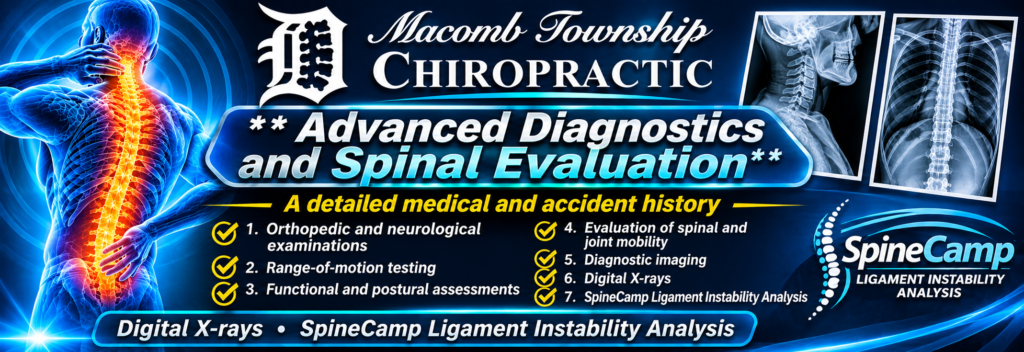
Digital Postural X-rays can help evaluate spinal structure and alignment. X-ray findings are considered alongside your history and examination rather than used in isolation. After evaluating the history, exam results, x-rays results, test treatment and any other diagnostics test results, the doctor can formulate a plan to get the patient feeling better, correct the cause of the pain, and get them back to their activities of daily living.
SpineCAMP Analysis
SpineCAMP technology may be incorporated into the evaluation process to provide additional measurements and analysis of spinal ligaments and movement. This advanced AI assisted computer x-ray analysis can help to determine if the spine has had any ligament overstretch injuries, which can cause permanent ligament instability. Ligament damage can lead to a whole host of symptoms as well as disc and joint degeneration. In fact it can be one of the leading causes of chronic neck pain, back pain and headaches. In addition, ligament inability injuries in the upper cervical spine. called cranial cervical instability, can mimic most of the symptoms present from a traumatic brain injury.
MRI's
How Can Chiropractic Care Help After an Auto Accident?
A motor-vehicle collision can place stress on the spine, joints, muscles, and surrounding tissues. Depending on the nature of an injury, chiropractic care and rehabilitation can help address pain, stiffness, reduced mobility and flexibility, muscle tension, and certain movement limitations.
At Macomb Township Chiropractic, Dr. Chris McNeil develops individualized care recommendations based on examination findings, your symptoms, and your functional needs.
Heated Vibrating Roller Massage Bed (Inetersegmental Traction Table "IST")
Heated vibrating roller massage bed treatments are done at the beginning of each treatment. This is done to allow the muscles to relaxes, stimulate the nerves to reduce pain and put motion into the spine and discs. Most patients say this is there favorite part of their treatment.
Muscle Gun Massage Therapy
A vibrating muscle gun is used with each treatment to allow the spinal muscle to relax before a chiropractic adjustment is delivered. The muscle gun can be used with different levels of intensity and with different attachments. The muscle gun may also be used on the shoulders, arms and legs.
Chiropractic Adjustments
Chiropractic adjustments may be used to address spinal and joint movement restrictions and improve mobility, realign vertebrae, restore normal range of motion and decrease pain levels. Adjustments may be performed with traditional manual manipulations, with the chiropractic drop table and with the adjusting instrument (aka “the nerve gun”). Adjustments are very gentle and do not need to be done with a “crack”.
Chiropractic BioPhysics (CBP) Posture and Spinal Rehabilitation Technique "Corrective Care"
Chiropractic Adjusting Instrument "Nerve Gun"
The Nerve Gun is a handheld, electrical or mechanical chiropractic adjusting instrument that delivers rapid, controlled, low-force mechanical impulses to the spine and joints. This targeted impulse can stimulate the spinal nerves to decrease muscle spasms, lower pain levels and help to retrain the posture and spinal alignment.
Posture Spinal Traction "The Posture Blocks"
Postural spinal traction is performed in the opposite potion to retrain the bodies tissues towards a normal healthy position.
Whiplash Rehabilitation
Whiplash can affect the muscles, joints, ligaments, and other structures of the neck. Depending on your condition, rehabilitation may incorporate appropriate chiropractic care, and other therapies intended to support recovery of neck movement and function. Common symptoms of whiplash are: neck pain, headaches, restricted range of motion, muscle spasms, shoulder & arm pain and numbness in the arms and fingers.
Disc Decompression Therapy
For selected patients with certain disc-related conditions, our office offers Kennedy Disc Decompression Therapy (A non-surgical treatment designed to gently stretch and decompress the spine, reducing pressure on spinal discs and surrounding structures).
This may be considered for conditions involving:
· Disc bulges
· Herniated discs
· Sciatica
· Radiating pain
· Neck or back pain
· Arm or leg pain symptoms
· Numbness and tingling
· Certain nerve-compression complaints
Therapeutic Modalities and Rehabilitation
Depending on your condition and treatment needs, additional services may include:
- Therapeutic laser
- Heat and ice therapy
- Therapeutic massage bed
- Balance and stability exercise platform
Recognizing Possible Head Injury Symptoms
A traumatic brain injury (TBI) can occur following a motor-vehicle collision. Some injuries may occur without an obvious external wound to the head, and symptoms can vary.
Possible symptoms may include:
- Headaches
- Dizziness
- Balance or coordination difficulties
- Difficulty concentrating
- Cognitive complaints
- Fatigue
- Sleep disturbances
- Sensitivity to light or sound
Our Approach to TBI-Related Symptoms
When appropriate, our office incorporates selected evaluation and rehabilitation approaches for patients experiencing TBI symptoms following an auto accident. If a traumatic brain injury is suspected, we can facilitate referral for further medical evaluation and definitive TBI diagnosis.
Our Additional services may include:
- BrainTap therapy
- Balance and coordination exercise platform
- Therapeutic laser applications (Trans-Cranial Laser Therapy) to the head and neck
These services are considered as part of an individualized plan and are not a substitute for appropriate medical assessment or TBI-specific treatment when needed.

Recovery Means Restoring More Than Just Pain Relief
An auto accident can affect more than your physical comfort. Injuries may interfere with your daily routine, mobility, independence, and overall quality of life.
As part of your evaluation, we consider how your condition may affect your ability to:
- Work: Perform your regular job duties and responsibilities.
- Household Activities: Clean, cook, care for children, and maintain your home.
- Yard Work: Mow, shovel, garden, lift, and perform other outdoor tasks.
- Recreation: Participate in sports, exercise, hobbies, and activities you enjoy.
- Family Life: Spend quality time with loved ones and participate in family activities.
- Daily Activities: Bend, lift, sit, stand, walk, drive, and sleep comfortably.
Understanding how an injury affects your daily life helps provide a more complete picture of your condition and functional limitations.
Our individualized care plans are designed to address your specific needs, monitor your progress, and help you work toward restoring mobility and returning to the activities that matter most to you!
Detailed Auto Accident Documentation
Accurate clinical documentation is an important part of healthcare following an auto accident. It helps establish a record of your reported symptoms, examination findings, recommended care, and progress over time.
When applicable, our clinical documentation may include:
- Mechanism and history of the injury
- Initial symptoms and patient-reported concerns
- Physical examination findings
- Orthopedic and neurological findings
- Range-of-motion measurements
- Functional limitations
- Relevant diagnostic findings
- Clinical diagnoses
- Treatment recommendations and services provided
- Response to treatment
- Periodic re-examinations
- Objective changes over time
- Prognosis and recommendations for restrictions when clinically supported
The goal is to maintain a clear clinical record of your care:
Accident History → Symptoms → Examination → Clinical Findings → Treatment → Reassessment → Progress
This documentation can help patients and, when authorized, other healthcare providers and legal representatives’ better understand the course of care and the findings recorded during treatment.

Monitoring Your Progress and Coordinating Care
Recovery is not always a straight line. Symptoms and functional abilities can change during the recovery process, which is why follow-up evaluations may be important.
As appropriate, your care may include:
- Periodic re-examinations
- Monitoring changes in symptoms and mobility
- Reassessment of functional limitations
- Review of treatment response and care recommendations
- Communication with other healthcare providers, when appropriate
- Referral for additional medical or specialty evaluation when indicated
Our goal is to make care recommendations based on your individual needs and clinical findings while coordinating with other providers when necessary.
Working With Your Personal Injury Attorney
Our focus is on providing patient-centered care, carefully documenting examination findings and progress, and recommending treatment based on your individual needs.
Your health and recovery remain our top priorities throughout your care!
Auto Accident Billing and Insurance Questions
Understanding how care will be billed after an auto accident can feel overwhelming. Our office can explain our billing procedures, discuss the information needed for your case, and answer questions about payment options and applicable insurance processes.
Coverage and payment responsibilities vary depending on your insurance policy and individual circumstances.
Our focus is on providing patient-centered care, carefully documenting examination findings and progress, and recommending treatment based on your individual needs.
Your health and recovery remain our top priorities throughout your care!
Understanding Michigan Auto Insurance and PIP Benefits
Coverage and payment responsibilities vary depending on your insurance policy and individual circumstances.
Our focus is on providing patient-centered care, carefully documenting examination findings and progress, and recommending treatment based on your individual needs.
Your health and recovery remain our top priorities throughout your care!
What to Do After an Auto Accident
Being involved in a car accident can be stressful, and it may be difficult to know what to do next. These steps can help you prioritize your health and keep important information organized.
1. Get evaluated promptly, even if you are feeling okay.
Don’t ignore symptoms simply because they initially seem minor. Seek appropriate medical evaluation after an accident, especially if symptoms develop or worsen. For serious or emergency symptoms, seek emergency medical care.
2. Report the accident to your insurance company.
Contact your auto insurance company to report the collision, obtain your claim number, and ask about your Personal Injury Protection (PIP) benefits and any applicable requirements or deadlines.
3. Bring your insurance and accident information to your appointment.
Have your insurance details, claim number, accident information, and relevant medical records available. This can help our office coordinate billing and maintain accurate documentation.
4. Follow up on your care and monitor your progress.
Follow the recommendations of your healthcare providers and attend scheduled follow-up appointments. Reassessments help monitor your symptoms, mobility, and progress and determine whether changes to your care may be needed.
5. Keep track of how your injuries affect daily life.
Make notes about your symptoms, when they occur, and how they affect work, sleep, driving, household responsibilities, exercise, and time with family. Sharing these details with your healthcare providers can help communicate the impact of your condition.
6. Keep important documents organized.
Save copies of accident reports, insurance correspondence, medical records, bills, and appointment information. If you have an attorney, keep them informed of relevant developments and follow their guidance regarding your claim.
Injured in an Auto Accident? We’re here to Help.
Don’t try to figure everything out on your own.
If you’ve been involved in a car accident and are experiencing neck pain, back pain, headaches, whiplash symptoms, numbness, sciatica, disc-related symptoms, balance difficulties, or other concerns, Macomb Township Chiropractic can evaluate your condition and help you understand your options for care.
Same-Day and Prompt Appointments May Be Available

Macomb Township Chiropractic
Advanced Chiropractic Rehabilitation & Disc Decompression Therapy
Dr. Chris McNeil
Macomb Township, Michigan